ItemStudy: Added reverse item, but still non-linear
Method found reverse item https://ipip.ori.org/new16PFKey.htm and [code update] https://git.mxr612.top/PsychoScales/ItemStudy/commit/594ebf9409fa0f5e78b6d3756d4b7a611629efcf Result Pivot the xy axes from above, can try non-linear correlation. Always feel that such an accurate test is because there is some bug (systematic flaw) when generating data
Method
Found reverse item https://ipip.ori.org/new16PFKey.htm and code update
Result
Pivot the xy axes from above, can try non-linear correlation. Always feel that such an accurate test is because there is some bug (systematic flaw) when generating data.
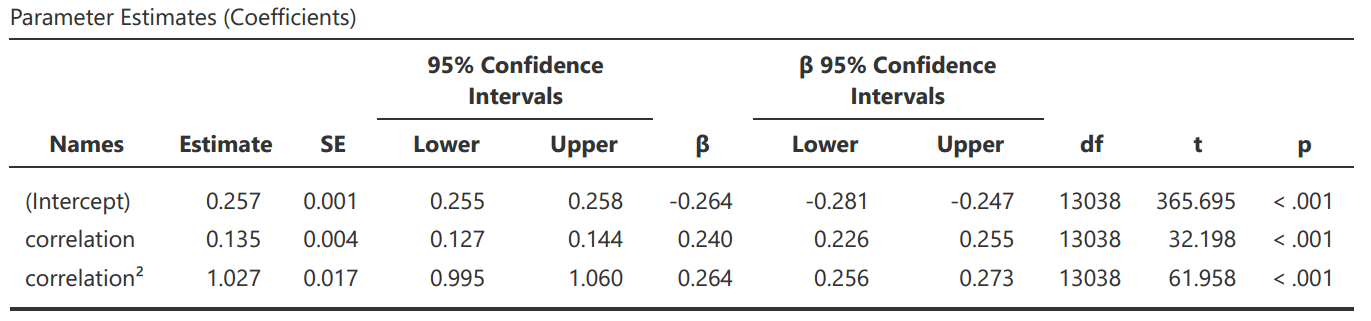
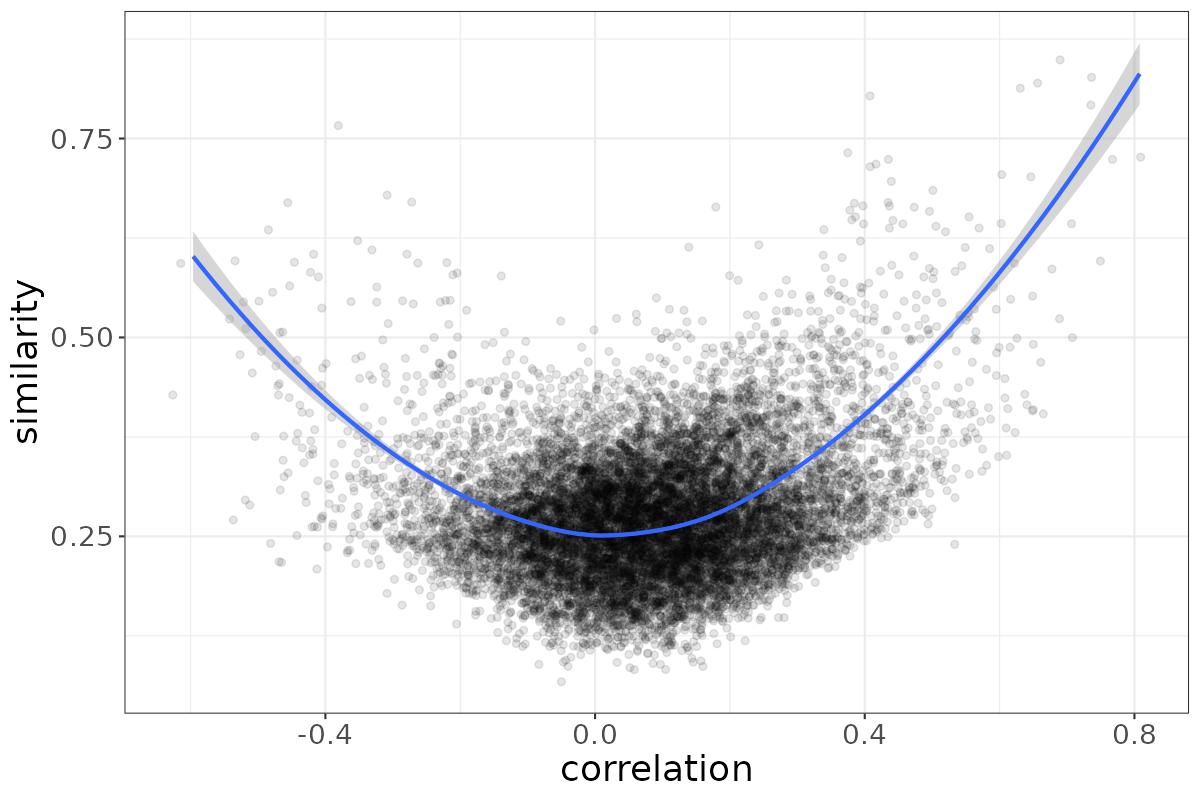 Before Reverse

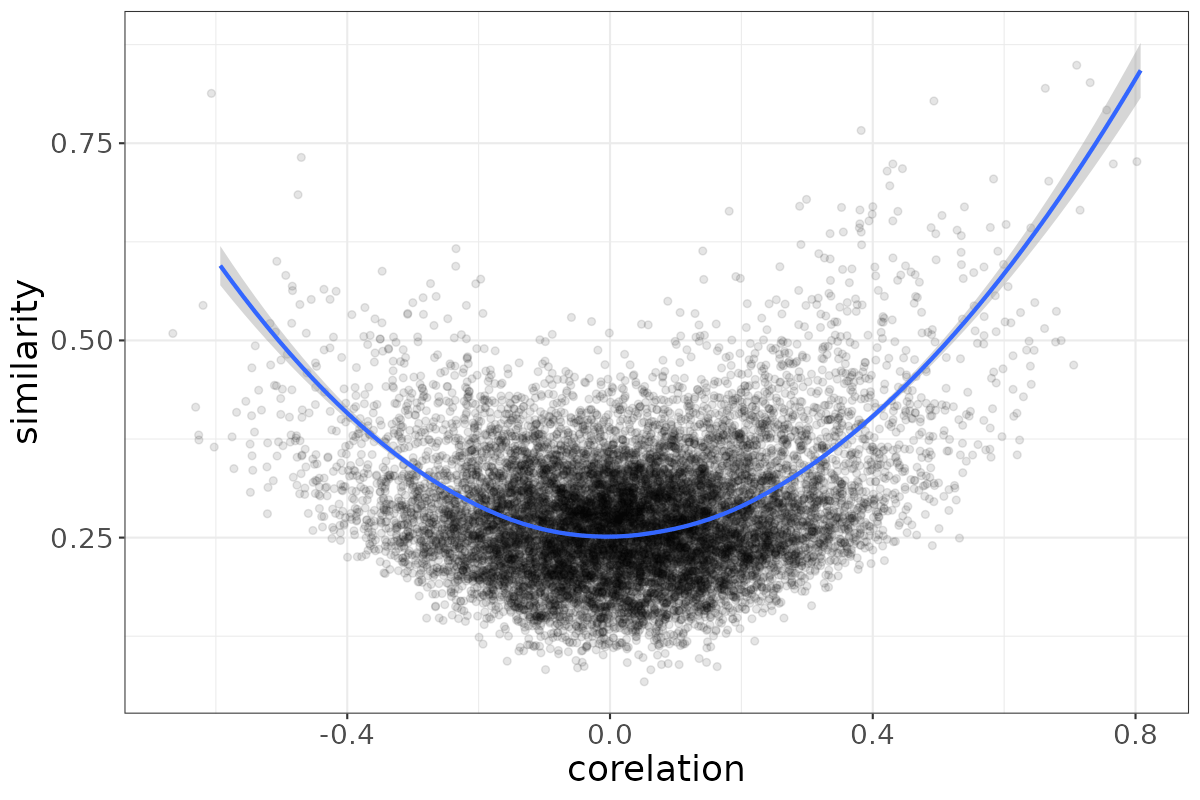 After Reverse
Discussion
Seems no difference) Parameters changed slightly but roughly the same. But it's strange that the absolute value indeed has a high correlation. It's possible that the semantics is still about "range", not the relationship of content direction.
Reference: Example with high similarity but much negative correlation :
{
    "C5": "I am not easily frustrated",
    "P8": "I am not easily annoyed"
}
Maybe the boilerplate structure takes up a lot of space, leading to high similarity.
In addition, the intrinsic correlation of the measured variables also has a big impact. For example: although both are negative emotions, they can both be considered as manifestations of introversion and extroversion after suppression (frustration and anger), and to some extent can be considered as two ends of an axis.
Also, C5 is not Reverse while P8 is Reverse. The Reverse of an Item is actually the direction relative to the measured variable, not the semantic direction, which is very noteworthy.
Comments
0No comments yet.